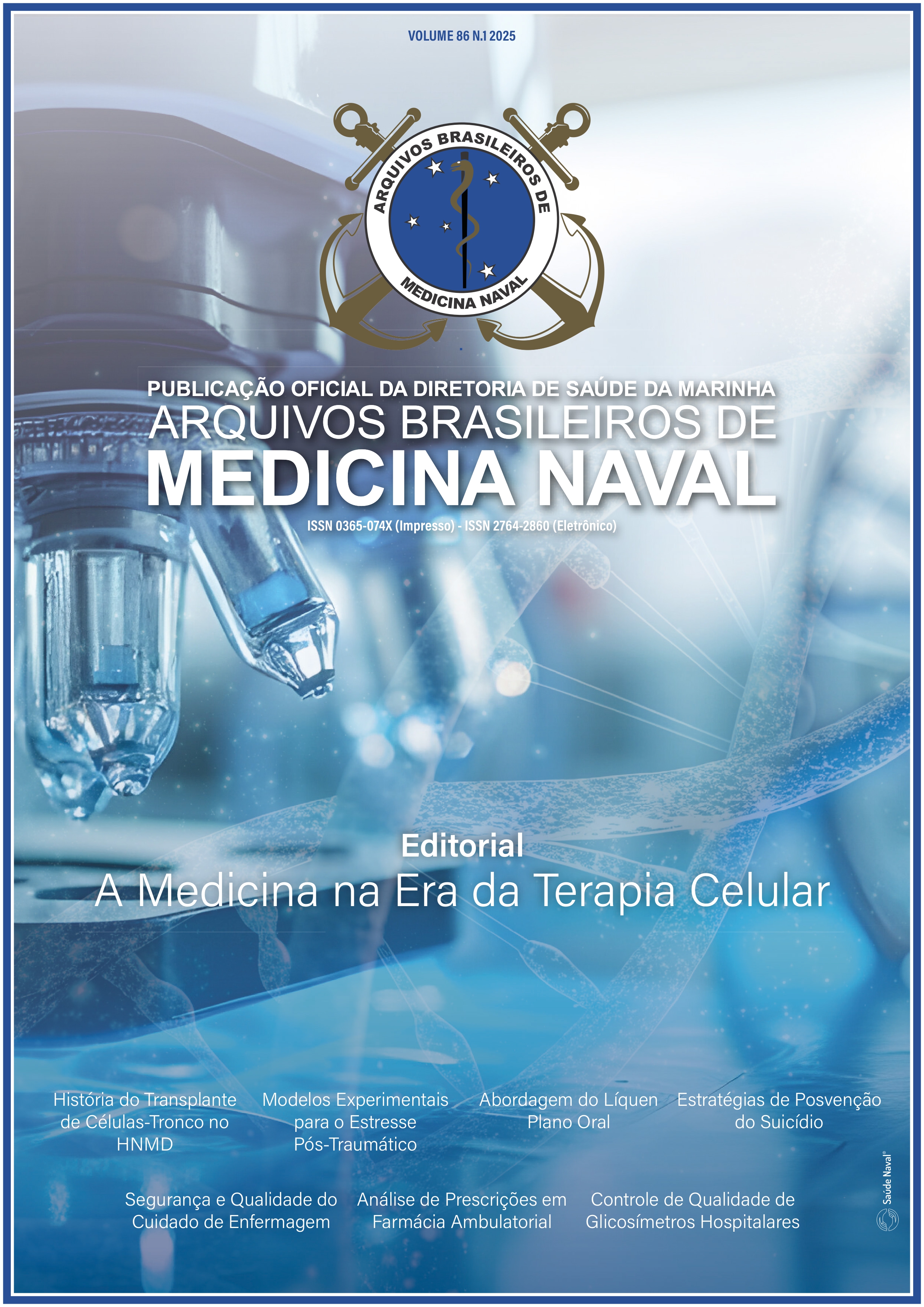
Experimental models of post-traumatic stress and their relevance to military health.
DOI:
https://doi.org/10.22491/2764-2860.2025.8473Keywords:
Stress Disorders, Military Health, Translational Research, Complementary Therapeutic MethodsAbstract
Post-Traumatic Stress Disorder (PTSD) is a multifaceted psychiatric condition characterized by persistent symptoms following exposure to traumatic events. Its prevalence is particularly high in military contexts, where exposure to life-threatening situations increases vulnerability to the disorder. This review article discusses advances and challenges in animal models used to investigate the neurobiological mechanisms of PTSD, with emphasis on military implications. Dysfunctions in the hypothalamic-pituitary-adrenal axis, alterations in the renin-angiotensin-aldosterone system, and dysregulated immune responses stand out, collectively highlighting the complexity of its pathophysiology. Experimental models based on social, predator-related, and physical stressors have contributed to reproducing symptoms analogous to those observed in humans, although they present limitations in translational validity. Recent approaches suggest that combining multiple stressors in unpredictable protocols may more accurately simulate combat-related trauma. Furthermore, studies indicate the need to incorporate genomic variables, sex differences, and long-term analyses to better understand the genesis and persistence of symptoms. Thus, animal models are consolidated as indispensable tools for advancing translational neuropsychiatry, providing relevant insights into the understanding of PTSD in military populations.
Downloads
Published
Issue
Section
License
Copyright (c) 2026 Arquivos Brasileiros de Medicina Naval

This work is licensed under a Creative Commons Attribution-NonCommercial-NoDerivatives 4.0 International License.